Select Your Active Roofing Emergency
Immediate tactical advice and on-call crew mobilization tailored for Northwest Ohio's severe Lake Erie weather phenomena:
Severe Winter Eave Ice Damming
Escaping attic thermal energy has melted heavy lake-effect snowpack into an ice ridge at freezing eaves, forcing trapped meltwater back up beneath shingles into ceiling drywall.
Lake Erie Gale Wind Shingle Blow-Off
55–70 mph western Lake Erie gales have fractured brittle asphalt seal strips, shearing shingle tabs and exposing bare plywood sheathing to driving precipitation.
Historic Brick Chimney & Valley Leak
Aging brick mortar and corroded lead or galvanized step flashing have separated in older neighborhoods (Old West End, Old Orchard), causing active attic leaks.
Commercial Flat Roof Ponding & Seam Split
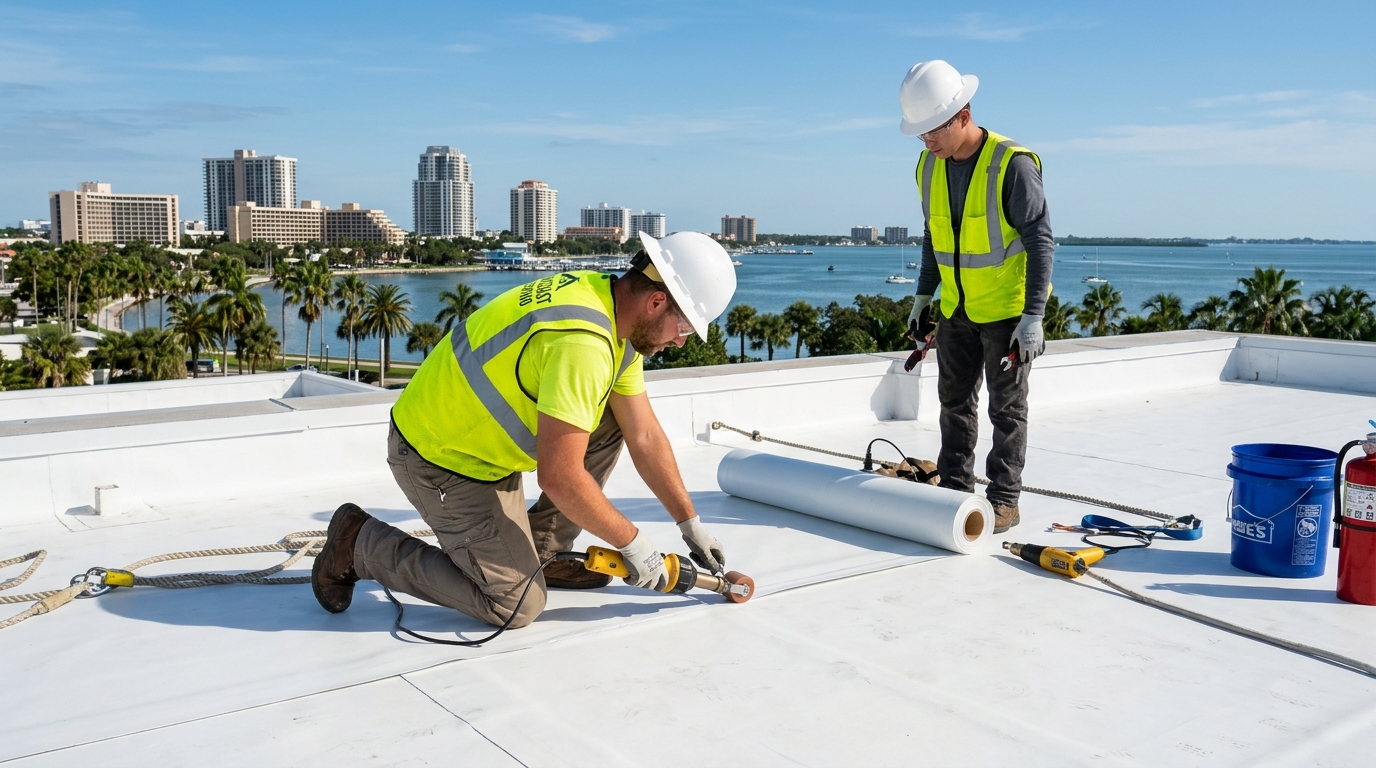
Low-slope commercial or residential TPO, EPDM, or Mod-Bit membranes holding ponding water over 48 hours have experienced seam de-bonding under freeze-thaw expansion.
1. Western Lake Erie Microclimate Dynamics & Severe Winter Exposure
The city of Toledo and surrounding Lucas and Wood counties occupy a unique and punishing meteorological position at the western tip of Lake Erie, where the Maumee River empties into Maumee Bay. This geographic interface creates severe microclimatic conditions unlike inland Ohio markets. Open, flat agricultural plains to the west allow arctic cold fronts sweeping down from central Canada to accelerate across Wood and Lucas counties unimpeded, generating sustained winter gale gusts between 45 and 65 mph.
When these frigid air masses collide with the relatively warmer moisture plume rising from Lake Erie, Northwest Ohio experiences intense lake-effect precipitation bands. In late autumn and winter, rapid-onset squalls dump heavy, moisture-dense snowpack onto residential roof planes. Compounding this physical load is the region's relentless freeze-thaw oscillation. During typical Toledo winters, temperatures cross the critical 32°F freezing threshold dozens of times per month. Solar radiation or escaping building thermal heat melts surface snow during afternoon hours; as twilight arrives and sub-zero Lake Erie breezes sweep inland, this meltwater flash-freezes, creating massive physical ice dams across eaves, gutters, and low-slope roof transitions.
Key Meteorological Stress Factors on Toledo Roof Assemblies:
- Lake Gale Horizontal Uplift: Unobstructed westerly winds generate extreme aerodynamic suction over roof ridges and windward eaves, prying apart cold-stiffened shingle seal tabs.
- Thermal Cycling & Ice Ridge Damming: High indoor heating differentials in historic housing melt lower snow layers, which refreeze into 4-to-8-inch thick ice ridges along cold unheated eaves.
- Older Housing Structural Fragility: Historic residential pockets (Old West End, Old Orchard, South End) feature original board sheathing, aged lead flashing, and unvented attic cavities vulnerable to chronic capillary moisture intrusion.
- Freeze-Thaw Masonry Reglet Cracking: Mortar joints on brick chimneys and masonry parapet walls expand and crack as trapped water freezes, severing counter-flashing bonds.
Technical Comparison 1: Eave Ice Barrier & Underlayment Resistance
Evaluating waterproof underlayment engineering standards under severe Lake Erie winter ice damming conditions:
2. Non-Destructive Moisture Diagnostics & FLIR Thermal Tracing
In older Toledo neighborhoods like the Old West End, Harvard Terrace, and Beverly, residential architecture frequently features multiple dormers, complex roof pitches, and original lath-and-plaster ceiling construction. When an ice dam or storm breach occurs on the exterior envelope, water rarely drips directly beneath the entry point. Instead, capillary action and structural gravity draw moisture dozens of feet horizontally along angled rafters, collar ties, and tongue-and-groove roof boards before breaking through interior plaster or pooling above ceiling light fixtures.
To prevent destructive drywall demolition, on-call Toledo contractors dispatched through our network deploy advanced non-destructive diagnostic instruments:
- High-Resolution FLIR® Thermal Infrared Thermography: Infrared sensors detect minute temperature differentials caused by evaporative cooling in damp insulation and wet wood framing, mapping subsurface moisture tracks in real time.
- Non-Invasive Dielectric Capacitance Moisture Meters: Calibrated radio-frequency meters measure moisture content behind plaster, drywall, and hardwood flooring up to 1.5 inches deep without puncturing surfaces.
- Borescopic Cavity Inspection Cameras: High-definition flexible probes inspect concealed attic cavities, soffit transitions, and chimney chases through minimal access ports.
This diagnostic methodology ensures exact pinpointing of the water ingress source on the exterior roof plane while establishing an indisputable digital record for insurance claim validation.
Technical Comparison 2: Shingle Wind Uplift & Sub-Zero Flexibility
Evaluating asphalt shingle performance during Lake Erie gale-force winter storms:
3. Step-by-Step Substrate Restoration Methodology
Restoring storm-ravaged and ice-damaged roofs in Greater Toledo requires systematic engineering protocols rather than temporary surface caulk:
- Phase 1: Emergency Stabilization & Hydraulic Diversion: Crews immediately address active interior water penetration. Drywall paint blisters holding standing water are strategically relieved with center-puncture drainage hoses into collection drums to prevent ceiling collapse. On the exterior, high-pressure steam de-icing wands melt clean drainage channels through eave ice dams without mechanical impact.
- Phase 2: Substrate Deconstruction & Sheathing Inspection: Saturated shingles, degraded tar paper, and delaminated wood decking are cut away back to sound structural framing. In older Toledo homes with 1x6 or 1x8 tongue-and-groove pine board decking, warped boards are replaced with exterior-grade CDX plywood, securely fastened into rafters with ring-shank nails.
- Phase 3: High-Performance Ice Barrier & Flashing Integration: Premium ASTM D1970 self-adhering SBS modified bitumen membrane is heat-bonded directly to clean decking, extending from the eave edge a minimum of 24 inches past the interior heated wall line. Step flashings along brick chimneys, stone dormers, and side walls are installed using 26-gauge galvanized steel or 16-ounce cold-rolled copper, counter-flashed into diamond-sawn masonry reglets.
- Phase 4: High-Wind Shingle Installation & Sealant Sealing: Color-matched architectural shingles (such as Owens Corning Duration or GAF Timberline HDZ) are installed using 6-nail high-wind mechanical fastening patterns. All exposed reglets and counter-flashing joints are sealed with premium ASTM C920 Class 50 polyurethane architectural sealants.
4. Building Code Compliance & Contractor Licensing in Lucas & Wood Counties
All roofing restoration operations across Greater Toledo must adhere strictly to Chapter 9 of the Ohio Residential Code (RCO), municipal building ordinances established by the City of Toledo Division of Building Inspection, and local regulations in jurisdictions like Sylvania, Perrysburg, and Maumee. Key code provisions include:
- Mandatory Ice Barrier Underlayment: RCO Section R905.1.2 mandates that in areas with a history of ice forming along eaves (all of Lucas and Wood counties), an ice barrier membrane (ASTM D1970) must extend from the roof eave to a point at least 24 inches inside the exterior heated wall line.
- Attic Ventilation Balancing: Re-roofing projects must maintain a minimum 1:150 net free ventilating area ratio (or 1:300 when balanced between continuous soffit intake and ridge exhaust), preventing winter attic heat buildup that fuels ice dam formation.
- Municipal Contractor Registration: Every independent roofing business routed through our referral network maintains verified municipal contractor registrations, current Ohio Bureau of Workers' Compensation coverage, and minimum ,000,000 commercial general liability insurance.
5. Preventative Property Maintenance & Winter Preparedness
Proactive envelope stewardship is essential to surviving Lake Erie winters. Property owners in Lucas and Wood counties should implement the following seasonal preventative measures:
- Attic Thermal Bypass Sealing: Before winter arrives, seal recessed lighting cans, attic access hatches, and plumbing chase penetrations with expanding foam or weatherstripping to prevent interior heated air from escaping into the cold attic cavity.
- Continuous Eave & Downspout Debris Cleansing: Clean gutters and downspout extensions every autumn following leaf-drop. Silt and frozen debris in gutters accelerate ice damming and force trapped meltwater under lower drip edges.
- Tree Canopy Setback: Trim mature oak, maple, and cottonwood limbs located within 10 feet of the roofline to minimize windblown branch abrasions and heavy limb punctures during winter gales.
- Post-Storm Visual Surveillance: Following any windstorm producing gusts over 50 mph or severe freezing rain events, inspect the roof perimeter using binoculars from ground level to identify displaced shingles, lifted valleys, or detached chimney flashings before latent leaks develop.
Toledo Emergency Roofing Service Portfolio
Emergency Roof Leak Repair →
24/7 on-call dispatch for active ceiling leaks, drywall blistering, and sudden weather barrier punctures across Toledo and Lucas County.
Explore Leak Mitigation Protocols →Emergency Roof Tarping →
Heavy-duty 10-mil woven poly timber batten tarping secured into structural rafters for wind tear-offs, fallen limbs, and exposed decking.
Explore Tarping Standards →Hail Storm Damage Inspection →
Forensic chalked 100-sq-ft test square analysis, ceramic granule loss documentation, and complete insurance adjuster claim dossiers.
Explore Hail Forensic Process →Flashing & Chimney Leak Repair →
Diamond-cut masonry reglet saw cutting, 26-ga step flashing replacement, chimney cricket water diverters, and ASTM C920 sealants.
Explore Flashing Protocols →Skylight & Pipe Boot Repair →
Replacement of cracked EPDM neoprene plumbing pipe collars, flashing collar resealing, and skylight curb weep channel restoration.
Explore Penetration Sealing →Flat Roof Ponding Repair →
Commercial and residential low-slope drainage restoration, TPO/EPDM seam molecular welding, and emergency sump water extraction.
Explore Flat Roof Engineering →Greater Toledo Suburban Dispatch Sectors
Sylvania Roof Repair →
Serving executive multi-gable subdivisions, architectural shingles, and heavy snow load ice dam mitigation across northern Lucas County.
Perrysburg Storm Damage →
Maumee River bluff wind shear repair, straight-line shingle tab blow-offs, and timber tarping across historic and modern Wood County estates.
Maumee Roof Tarping →
Historic riverfront parcels, steep gables, tree limb punctures, rafter sistering, and rapid weather barrier containment along the Maumee River.
Oregon Roof Leak Repair →
Lake Erie eastern shoreline wind exposure, driving lake-effect rain, horizontal precipitation barrier sealing, and valley flashings.
Active Roof Leak or Severe Storm Damage in Greater Toledo?
Zero web forms, voicemail queues, or contractor delays. Speak directly with a live Toledo regional emergency intake coordinator right now.
CLICK TO CALL DISPATCH: (888) 208-4155